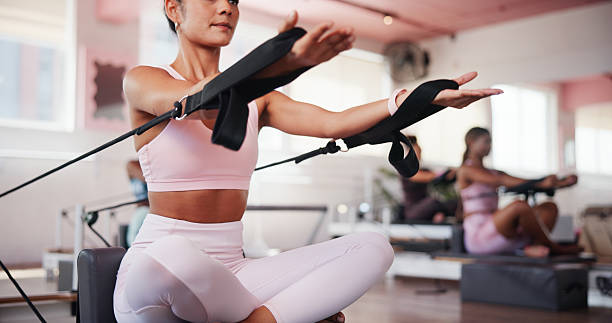
A leg starts to quiver during footwork—the core trembles during a plank. An arm shakes as it holds a strap. These reactions can feel alarming, especially during a first class. In many cases, shaking begins when working muscles struggle to maintain steady force. The nervous system must continually adjust which muscle fibers are active and how quickly they respond. Better Posture Pilates helps clients understand these reactions during Pilates Reformer classes in Chicago. Our skilled instructors can change the spring setting, movement range, pace, or body position when control begins to fade.
Mild trembling during effort does not always signal a problem. However, shaking with pain, dizziness, faintness, numbness, or unusual weakness needs a different response. Understanding what causes Pilates muscle shaking can help clients move with more confidence, notice warning signs, and make better exercise choices.
Why Your Muscles Shake During Pilates Exercises
Many clients ask, why do you shake during Pilates? The most common reason is temporary muscle fatigue. A muscle may still complete the movement, but it may struggle to produce smooth and steady force. People also search for why muscles shake during exercise because the reaction can happen during Pilates, strength work, yoga, cycling, and other physical activities. The nervous system sends signals to groups of muscle fibers called motor units.
As the exercise becomes harder, the body may activate more motor units to maintain the position. Those signals may become less steady as the working muscles tire. This can create visible trembling. Whether shaking during Pilates is normal depends on what else is happening. Mild shaking in the working muscle may be a common fatigue response. Shaking paired with sharp pain, dizziness, faintness, chest discomfort, or sudden weakness should not be ignored.
What Causes Visible Muscle Shaking In Pilates
Pilates often asks one body area to remain steady while another area moves. The pelvis may need to stay level while one leg reaches. The ribs may need to remain controlled while the arms pull straps. These tasks place steady demand on the stabilizer muscles in Pilates. Slow movement also makes small changes easier to notice. A fast movement may hide poor control. A slow Pilates exercise gives the body more time under tension, so trembling may become clear.
Several parts of Pilates training can increase the demand:
- Long holds may create isometric muscle fatigue.
- Slow repetitions keep muscles working longer.
- A narrow base can make balance harder.
- Spring resistance may support one phase and challenge another.
- A longer arm or leg position increases the load on the core.
- New movement patterns demand more concentration and coordination.
This explains why muscle shaking during workout sessions may begin before someone feels fully exhausted. The exercise may test balance, timing, endurance, and control rather than basic strength alone. We provide private and group Pilates in Chicago for clients with different experience levels, goals, and movement needs.
What Muscle Fatigue During Pilates Really Means
Muscle fatigue does not mean the muscle has stopped working. It means the body cannot produce or control force as well as it could at the start of the exercise. Fatigue can involve both the working muscles and the nervous system. During a demanding exercise, the body tries to maintain the required force. It may increase motor unit recruitment during exercise, alter signal timing, and activate additional muscle fibers.
However, these changes do not always create smooth movement. The result may appear as muscle tremors during exercise. Neuromuscular fatigue during exercise can reduce force control, coordination, and movement quality. A client may still complete the repetition, but the body may begin using other muscles to compensate. For this reason, shaking should be treated as useful feedback. It does not automatically mean the exercise is harmful. It also does not prove the exercise is being performed correctly.
Why Your Core And Legs Shake More In Pilates
The legs and core frequently shake because Pilates gives them long stabilizing jobs. They may work through several repetitions without fully resting.
Core Shaking During Pilates
People often ask, why does my core shake during Pilates? The abdominal muscles, back muscles, diaphragm, and pelvic floor help control the trunk. They work together to keep the ribs and pelvis organized while the arms or legs move. A leg reach, for example, can pull the pelvis forward. The core must resist that pull. If the leg moves farther than the client can control, the abdominal area may start trembling.
The instructor may reduce the leg range, bend the knee, shorten the hold, or support the head. These changes can help maintain proper Pilates form when shaking. During our Pilates Reformer classes in Chicago, an instructor can observe the full movement instead of focusing only on the shaking area.
Leg Shaking During Pilates
Clients also ask, why do legs shake during Pilates? Footwork, bridges, lunges, side-lying work, and standing Reformer exercises can keep the quadriceps, glutes, calves, and hip muscles active for long periods.
A moving carriage adds another challenge. The legs must push the carriage away and control it as it returns. This is why body shaking during Reformer Pilates may become more noticeable during slow carriage movement.
Normal Pilates Shaking Versus Warning Signs
Shaking needs context. Mild trembling in the muscles performing the exercise may result from muscle fatigue during Pilates. It should usually lessen after rest, a smaller range, or a lighter exercise version.
Symptoms involving the whole body or affecting awareness need more care.
| What Happens | Common Fatigue Response | Reason to Stop |
| Location | Working muscle or nearby support muscles | Whole body or an unrelated body area |
| Timing | Begins during a demanding exercise | Starts suddenly without clear effort |
| Sensation | Effort, warmth, or mild muscle burning | Sharp pain, numbness, or marked weakness |
| Recovery | Settles after rest or an easier variation | Continues, worsens, or returns often |
| Other symptoms | Normal breathing and awareness | Dizziness, faintness, chest pain, or confusion |
Understanding when to stop exercising due to shaking is important. Stop the exercise when trembling becomes strong enough to affect alignment, breathing, balance, or awareness. A Pilates instructor can adjust the exercise, but an instructor cannot diagnose the medical cause of ongoing or unexplained shaking.
Does Shaking During Pilates Mean It Is Working
Shaking can show that an exercise feels demanding. However, it does not prove that the exercise is being performed well. A person may shake while using a suitable effort level. Someone may also shake because the spring resistance, movement range, hold time, or class level exceeds current control. The goal is not to chase trembling. The goal is to maintain useful movement.
The ribs should not lift sharply. The pelvis should not twist to finish a repetition. The shoulders should not rise toward the ears. The neck should not take over for the abdominal muscles. If you are searching for a Pilates studio in West Loop, we provide personal form checks during private sessions and group classes. Owner Marilyn D’Andrea has taught Pilates since 2004 and holds a master’s degree in Exercise Science.
What To Do When Pilates Shaking Starts
Learning how to reduce muscle shaking often begins with a small change rather than ending the entire session.
- Pause and take one or two steady breaths.
- Reduce the movement range or shorten the hold.
- Complete fewer repetitions with better control.
- Ask the instructor to change the spring resistance.
- Widen the base when balance feels unstable.
- Stop when shaking appears with pain or other warning signs.
Pilates breathing and muscle control work together. Holding the breath can increase tension and make the exercise feel harder. A steady exhale may help coordinate the ribs, abdominal wall, diaphragm, and pelvic floor.
How Recovery Restores Pilates Muscle Control
Good recovery gives the body time to respond to training. A hard session creates temporary fatigue. Rest allows the muscles and nervous system to prepare for the next class. Muscle recovery after Pilates may include enough sleep, regular meals, suitable fluid intake, and lighter activity between demanding sessions. Recovery needs differ based on age, health, training history, class intensity, and other weekly exercise.
More classes do not always produce faster progress. A tired body may use poor movement patterns, hold excess tension, or rely on stronger muscles to protect weaker areas. A useful weekly schedule should leave enough time for soreness and fatigue to settle. Beginners may start with one or two sessions each week. More experienced clients may attend more often when their bodies recover well.
Why Pilates Instructor Guidance Improves Control
A Reformer cannot see when the pelvis shifts. Springs cannot notice when the neck takes over. An instructor can watch these changes and adjust the exercise before movement quality drops further. Better Posture Pilates has served Chicago clients for more than 20 years. The instructors provide personal corrections during private sessions and group classes. They can adjust the spring load, movement range, starting position, and exercise choice.
Clients should share current pain, past injuries, health concerns, and recent changes before class. Honest information helps the instructor choose a safer starting point. A person who shakes during one exercise may not need to avoid Pilates. The movement may need a different setup. A shorter range or slower pace may allow the right muscles to work without losing alignment.
Guided Pilates in Chicago To Build Better Control
Shaking during Pilates often reflects fatigue and changing nervous-system activity. Mild local shaking may settle after a pause or adjustment. Strong, unusual, or persistent trembling needs more attention. Pain, dizziness, faintness, numbness, confusion, and sudden weakness are not signs to push harder. We offer Pilates Reformer classes in Chicago with close form checks and exercise changes based on current ability.
Clients can learn how breathing, resistance, body position, and range of movement affect control. The studio serves West Loop, West Town, Gold Coast, and nearby Chicago communities. Better Posture Pilates is located at 1357 W. Grand Avenue, Chicago, IL 60642. Call (773) 386-8831 to discuss private or group class options.
FAQs
Why do muscles shake during Pilates exercises?
Muscles may shake when fatigue makes force production less steady. The nervous system recruits more motor units to maintain the position. Mild trembling can occur during a hard hold or slow repetition. Shaking with pain, dizziness, numbness, faintness, or unusual weakness needs prompt attention.
Is shaking during Pilates caused by weakness or fatigue?
It can involve low endurance, unfamiliar movement, muscle fatigue, or limited coordination. Even a strong person may shake during a new exercise. The useful response is to reduce the range, resistance, or hold time while keeping breathing and body position under control.
Does shaking mean a Pilates exercise is working correctly?
No. Shaking only shows that the task feels demanding or that control is changing. It does not prove correct form. The exercise may still be useful when alignment stays steady. If the pelvis twists, breathing stops, or pain begins, the movement should be adjusted.
Should someone stop a Pilates exercise when muscles shake?
Not always. Mild local trembling may settle after a short pause or easier variation. Stop when shaking becomes strong, affects balance, changes normal form, or appears with pain, dizziness, chest discomfort, numbness, confusion, faintness, or sudden weakness.
Why do the legs and core shake during Reformer Pilates?
The legs and core must control the moving carriage while keeping the ribs and pelvis steady. Spring resistance and slow movement increase the time spent working. These combined demands may cause visible trembling before the larger muscles feel fully tired.
How can private Pilates near West Loop improve body control?
Private instruction gives the teacher more time to observe breathing, alignment, resistance, and movement range. The teacher can shorten a lever, change the springs, or pause an exercise when control fades. Progress depends on health, regular practice, recovery, and the body’s response.