Sitting for hours does more than make the body feel stiff. The hips tighten, which can pull the pelvis out of its usual position. When that happens, the lower back may work harder to keep the body upright. The shoulders may start to round, while the neck takes on extra strain. By the end of the day, a person may feel sore, tired, and less willing to move. That pattern can show up during simple tasks. Standing from a chair may feel slow. Reaching overhead may feel tight. A short walk may leave the back feeling worn out. The benefits of Pilates can help address these linked problems through steady movement, breathing, and muscle control.
Better Posture Pilates offers private and small group lessons for people across Chicago. Someone looking for a Pilates studio in Chicago, IL may need more than a place to exercise. They may need an instructor who can see where the body loses support. Our instructors monitor each client’s movement and adjust the pace, equipment, and exercise selection as needed.
How Pilates Trains Your Body As One System
The body works as a chain. When one area stops doing its share, another area often has to work harder. Weak hips may alter how a person stands. That change can place more work on the lower back. Rounded shoulders may pull the head forward. The neck may tighten as it tries to hold that position. A small problem in one place can spread through the rest of the body.
The Pilates benefits come from teaching these areas to work together again. Many exercises ask the hips, spine, ribs, and shoulders to stay organized while the arms or legs move. This helps the body build support without rushing. A low-impact full-body exercise can still be hard work. The joints may experience less pounding, but the muscles must remain active and under control. With regular practice, walking, bending, reaching, and standing may become easier.
How Pilates Training Supports Better Posture
Poor posture often starts with habits that repeat every day. A person may lean toward a screen, sit more on one hip, or lift the shoulders during stress. Over time, the body gets used to those positions. Some muscles become tight, while others fail to provide adequate support. Pilates for posture improvement helps people notice those habits. It teaches them how the head, ribs, shoulders, pelvis, and feet interact. A trained instructor can often see when the ribs lift, the shoulders round, or the pelvis shifts during movement.
Posture correction exercises may help strengthen the muscles around the spine and shoulders. Breathing work may ease extra tension in the neck and chest. Slow movement gives the body time to learn a better position. The goal is not to stand stiff or hold the stomach in all day. The goal is to help the body stay supported while sitting, walking, lifting, and moving through normal life. The studio uses clear cues and hands-on corrections when suitable. Therefore, clients can learn how a small change affects the whole movement. Over time, these skills may help posture feel more natural, not forced.
How Pilates Builds Strength You Use Daily
Pilates strength comes from control, not speed. Because the body must stay steady, smaller support muscles take part. The core includes the deep belly muscles, back muscles, diaphragm, and pelvic floor. These areas help support the spine and pelvis. Therefore, Pilates for core strength can help during work, exercise, and home tasks.
- Core strength training may improve control while lifting, reaching, or carrying.
- In addition, core strength classes can build muscle endurance through steady practice.
- Spring resistance may challenge the body without heavy impact.
The goal is not to brace every muscle all day. Instead, the body learns when to create support and when to relax. As a result, movement may feel more stable. Strong support can help a person move with better form and less wasted effort.
How Pilates Improves Flexibility And Mobility
Flexibility means a muscle can lengthen. Mobility means a joint can move with control. Although these skills work together, they are not the same. Pilates trains both through steady movement and useful range. Therefore, Pilates for flexibility does more than hold long stretches. The muscles work while they lengthen. This can help the body stay strong across a wider range. Flexibility classes may focus on tight hips, shoulders, back muscles, and legs.
However, the goal is not to push every joint as far as possible. For this reason, safe movement matters more than depth. Because each person starts at a different level, instructors can adjust range and resistance. Over time, improved control may make bending, reaching, walking, and turning feel easier. This may support comfort during daily life.
Why Reformer And Mat Pilates Feel Different
Both mat and Reformer work can build control, strength, and body awareness. However, each method creates a different training feel. Equipment and mat work can match the client’s needs.
Mat Based Pilates Exercises And Benefits
Meanwhile, mat work uses body weight and small props. Therefore, it can teach control without large equipment. It may challenge balance because the floor gives less help.
Reformer Pilates Exercises For Strength
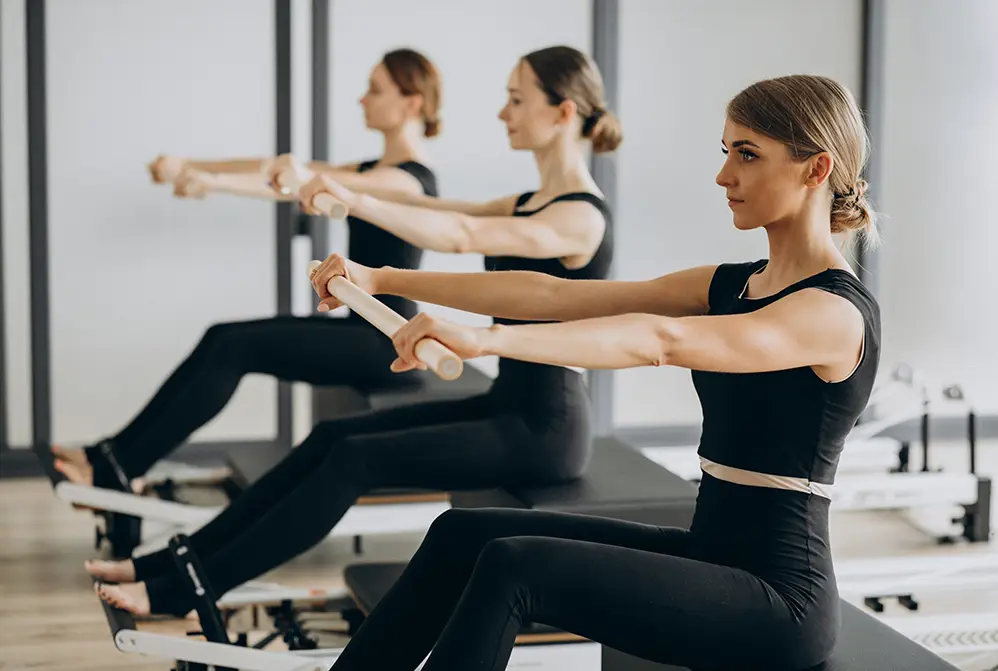
A Pilates Reformer uses a moving carriage, straps, and spring resistance. Because springs can change, the instructor can add support or challenge. The benefits of Reformer Pilates may include guided movement, adjustable resistance, and clear feedback.
A related guide on Reformer vs. Mat Pilates can help readers compare the two. However, either method can support strong movement when form stays clear and controlled.
What Pilates Beginners Can Expect In Class
New clients often worry that they are not flexible or strong enough. However, Pilates for beginners should start at a level that is safe for the person. A beginner may learn breathing, foot position, rib control, and pelvic support. Because these basics guide harder exercises, they deserve time and care. Reformer Pilates classes can help beginners feel the path of each movement. Yet a private setting may provide more personal feedback. Moreover, a personal Pilates instructor can adjust resistance, range of motion, and pace during the session. This gives the instructor time to learn the client’s goals and limits. As confidence grows, the client may choose a small group format.
What Pilates Classes Typically Cost In Chicago
Cost is an important factor when choosing Pilates classes in Chicago. Better Posture Pilates offers a 55-minute private intro session for $60. Two private sessions cost $120. New clients can choose four classes plus one private session for $140. An introductory Reformer class costs $15. These options give beginners several ways to get started. Private Pilates sessions may suit clients who need one-on-one guidance. Small group Pilates classes may suit people who enjoy shared instruction. Reformer Pilates classes offer equipment-based training with spring resistance. Each option supports different goals, comfort levels, and budgets. Because prices and packages may change, clients should confirm current rates before booking.
What To Expect In Pilates Classes Near Chicago
A local class should provide instruction tailored to the client’s needs. Better Posture Pilates offers private and small group instruction near Grand Avenue. People searching for Pilates near me in Chicago may compare class size, teacher attention, and support for beginners. Our studio has served Chicago clients for more than 20 years. Marilyn D’Andrea holds a master’s degree in Exercise Science.
| Service format | What clients can expect | Best fit |
| Private Pilates Classes | One-on-one cues and adjusted exercises | Beginners, injuries, or personal goals |
| Private Pilates Sessions | Focused work with close form checks | Clients who want direct support |
| Small Group Pilates Classes | Shared class with personal corrections | Clients who enjoy group energy |
| Pilates Reformer Classes in Chicago | Spring-based resistance and guided movement | Clients seeking equipment-based training |
At Better Posture Pilates, we encourage clients with old injuries or ongoing discomfort to begin with private instruction. A Pilates studio in Chicago, IL, should make class options clear before a client books.
How Pilates Supports Different Bodies And Needs
Pilates can serve people of all ages and goals because instructors can adjust the range of motion and resistance. However, each group may need a different plan. The instructor should consider health history, current ability, and comfort.
- For example, Pilates for seniors may focus on balance, posture, mobility, and daily strength.
- Prenatal Pilates may support safe movement with suitable changes during pregnancy.
- Sports performance Pilates may focus on control, balance, rotation, and joint support.
Some clients seek Rehabilitation Pilates after medical care. In that case, fitness instruction should support the care plan, not replace it. Moreover, Pilates for balance and mobility may help people practice steady movement in a controlled setting. Clear guidance matters because safe progress depends on the person, the condition, and the advice of qualified health professionals.
Pilates Safety Limits And Smart Progression
Pilates can support many goals, but it is not a cure for every concern. Because pain has many causes, a client should speak with a health professional when pain is sharp, new, or severe. Pilates for back pain may support strength, posture, and movement control. However, the exercise plan must fit the person’s needs. In addition, the studio asks about goals, past injuries, limits, and current fitness.
Our instructors can adjust the range, spring resistance, and exercise selection. Yet they do not replace medical diagnosis or treatment. Progress should feel steady, not rushed. A client may begin with simple movements and gradually build on them. Therefore, honest feedback is important in each session. The best plan respects pain signals, health advice, and the client’s current ability.
Your Steady Path Toward Easier Everyday Movement
Pilates works best when people practice with care and stay consistent. It takes time to change the way you move, so steady sessions are often more important than hard sessions. Better control, stronger support, greater flexibility, better balance, and a better understanding of one’s own body are among the health benefits of Pilates. Factors that can change the results are age, health, schedule, and starting level. Better Posture Pilates does one more thing. It gives its clients a clear vision of where they can learn, practice, and change. If you are looking for a Pilates studio in Chicago, IL, you can choose between private or small-group support. Our instructors focus on form, breathing, and useful movement. Therefore, each session can connect to real tasks outside the studio. With clear guidance, Pilates can become a practical part of a healthy weekly routine.
Frequently Asked Questions About Pilates Classes
What are the main benefits of Pilates for posture, strength, and flexibility?
Pilates trains controlled movement, breathing, and body awareness. Because the exercises link the core, spine, hips, and shoulders, they may improve support and control. Regular practice may help posture, muscle endurance, flexibility, balance, and daily movement. Results depend on health, effort, training frequency, and proper guidance.
Can Pilates build core strength without high-impact exercise?
Yes. Pilates can challenge deep support muscles through slow movement, body weight, and spring resistance. Therefore, the joints may face less impact than jumping or running. The exercises can still feel demanding. A trained instructor can adjust resistance, range, and pace for the client’s current ability.
Is Reformer Pilates better than mat Pilates for beginners?
Neither format is best for every beginner. Mat work teaches body control with limited equipment. Reformer work uses springs and a moving carriage for support or resistance. Because beginners have different needs, instructor guidance matters more than the format. Private instruction may help clients learn safe form.
What can clients expect from Pilates classes in Chicago?
Clients can expect controlled exercises, breathing cues, form checks, and progress based on current ability. This Chicago studio offers private and small group instruction near Grand Avenue. Because individual needs vary, clients can choose one-on-one support or a shared setting with personal corrections during class.
Where can beginners find Reformer Pilates classes in Chicago?Beginners can look for small classes, trained instructors, clear booking details, and personal form checks. Reform-based instruction can suit learners with different levels of experience. Because new clients may need extra help, a private session can provide a clear starting point. Later, they may join a group class.